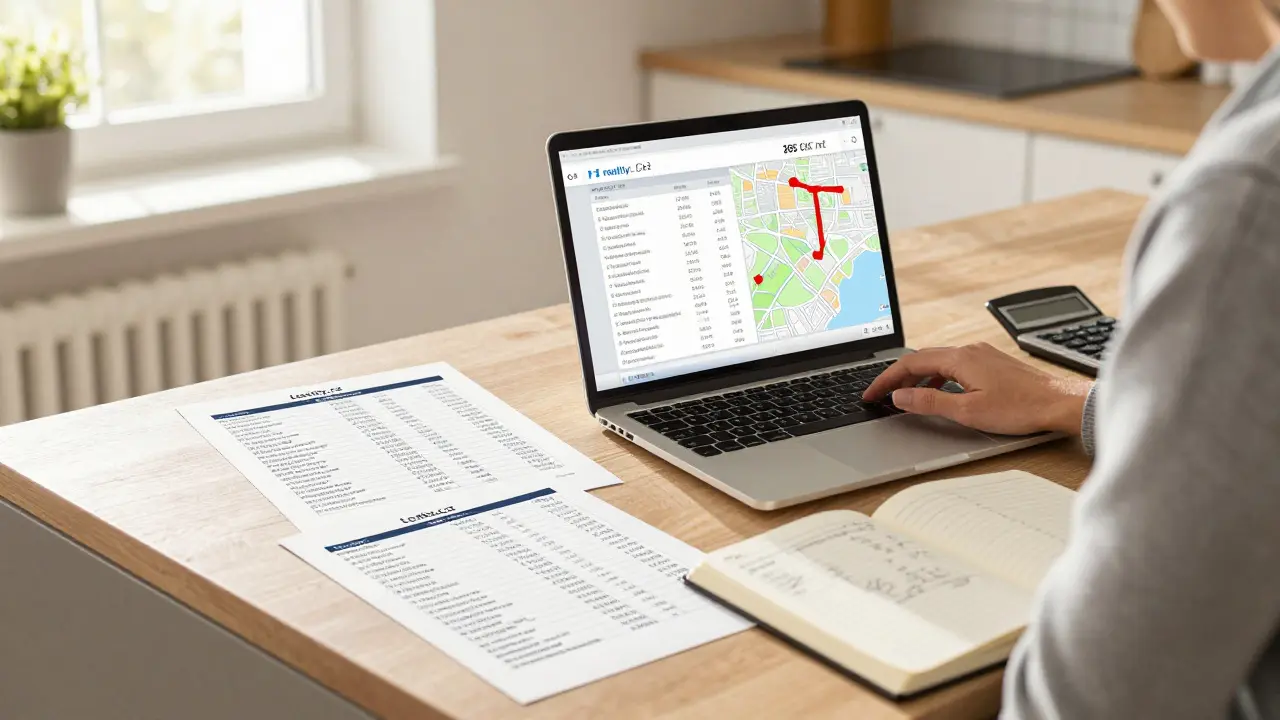
Setting the right rent isn't just about what you think your property is worth. It's about what the market actually pays - and how to protect your income over time. In the Czech Republic, many landlords make the same mistake: they set rent once and forget it. Then, after a few years, they realize their income has lost value. That’s where market analysis and proper indexation come in. This isn't about legal jargon. It’s about keeping your investment alive.
Co vlastně znamená nastavit nájemné správně?
When you set rent, you're not just picking a number. You're deciding how much your property is worth right now in its location, condition, and demand. A 70 m² apartment in Prague 5 might rent for 22,000 CZK. The same size in Ústí nad Labem might get 11,000 CZK. Why? Because location drives price. You need to look at what similar apartments are actually renting for - not what the owner claims online, but what’s being signed in leases.
Check listings on reality.cz, szs.cz, or byty.net. Filter by exact number of rooms, floor, year built, and whether it’s furnished. Look at ads that have been up for more than two weeks - those are the ones people are actually paying for. If five similar units rent for between 18,500 and 19,500 CZK, don’t go higher than 19,000. You’ll wait longer. Go lower? You’ll leave money on the table.
Don’t forget amenities. Does the building have a lift? Is parking included? Is the heating modern? A well-insulated apartment with new windows can command 10-15% more than one with single-pane windows. A basement storage unit adds value. A balcony facing south? That’s a premium. These aren’t small details - they’re price factors.
Proč je tržní analýza důležitější než vaše pocity?
Many landlords think: “My place is nicer than the others.” Maybe. But if the market says 18,000 CZK, and you ask for 21,000 CZK, you’ll sit empty for months. Tenants don’t care about your pride. They care about value.
Here’s what works: gather data from 10-15 comparable rentals in your neighborhood. Note the rent, square meters, condition, and extra features. Then calculate the average price per square meter. For example:
- Apartment A: 19,000 CZK / 72 m² = 264 CZK/m²
- Apartment B: 17,500 CZK / 68 m² = 257 CZK/m²
- Apartment C: 20,500 CZK / 75 m² = 273 CZK/m²
Average: 265 CZK/m². Your 70 m² apartment? Multiply: 70 × 265 = 18,550 CZK. That’s your starting point. Adjust up or down by ±5% based on your condition - new kitchen? +7%. Old bathroom? -5%.
This method works because it’s objective. It’s not guesswork. It’s what the market is doing right now - and that’s what matters.
Co je inflační doložka a proč ji potřebujete?
Even if you set rent perfectly today, inflation will eat it over time. In 2022, Czech inflation hit 15.1%. That means if your rent stayed at 15,000 CZK, you lost over 2,000 CZK in real income that year. Without indexation, you’re giving away money.
An inflační doložka (inflation clause) is a legal part of the lease that automatically adjusts rent based on official inflation data from the Czech Statistical Office (ČSÚ). It’s not optional - if you want your income to keep up with rising prices, you need it.
Here’s how it works in practice:
- You sign a lease with a clause like: “Rental amount will be adjusted annually based on the year-over-year change in the Consumer Price Index (CPI) published by the Czech Statistical Office.”
- Each year, ČSÚ releases the average inflation rate for the previous year (usually in February).
- You calculate the new rent: current rent × (1 + inflation rate).
- You notify the tenant in writing before the adjustment date.
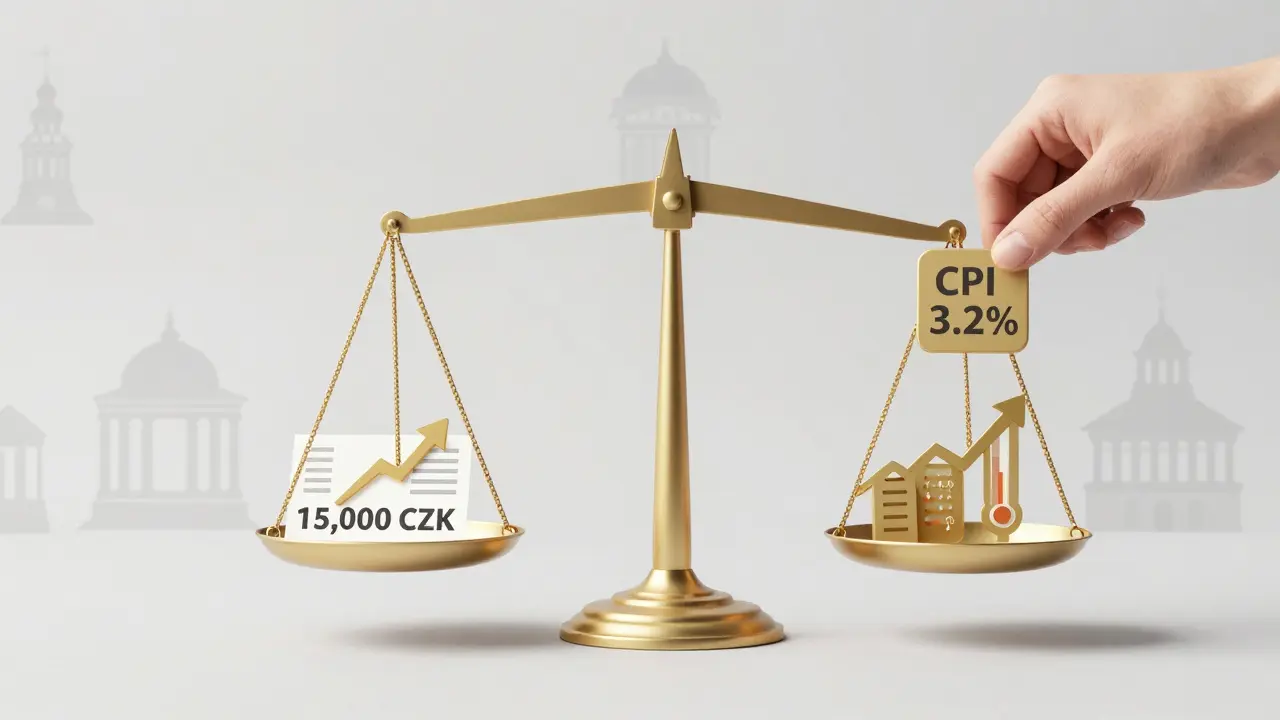
Example: Rent is 15,000 CZK. Inflation for 2025 was 3.2%. New rent = 15,000 × 1.032 = 15,480 CZK.
This isn’t a raise. It’s a correction. You’re not making more - you’re just keeping what you had.
Jak správně napsat inflační doložku v smlouvě?
A bad clause causes disputes. A good one prevents them. Here’s what must be included:
- Index: Only the official CPI from ČSÚ is legally safe. Don’t use wage data or vague terms like “market inflation.”
- Frequency: Annual is standard. Some use biennial, but annual is simplest.
- Timing: Specify the date - e.g., “effective on January 1st each year.”
- Calculation: “The rent shall increase by the percentage change in the average annual CPI for the preceding calendar year.”
- Notice: “Landlord must notify tenant in writing no later than 30 days before the adjustment date.”
- Contingency: “If the CPI is discontinued, the closest available index published by ČSÚ shall be used.”
Example wording:
“Pronajímatel a nájemce dohodli, že nájemné bude každoročně upraveno na základě roční změny indexu spotřebitelských cen (CPI) oznámeného Českým statistickým úřadem pro předchozí kalendářní rok. Zvýšení bude provedeno 1. ledna každého roku. Pronajímatel povinně oznámí nové nájemné písemně nejpozději 30 dní před datem zvýšení.”
Don’t use percentages like “70% of inflation.” That’s confusing. If you want to cap increases, say so clearly: “Maximum annual increase: 5%.” But be honest - if inflation is 8%, and you cap at 5%, you’re still losing money.
Kdy můžete zvýšit nájemné a co se stane, když to přeskočíte?
ČSÚ releases inflation data around mid-February each year. That’s when you get the official number for last year’s inflation. You have to act fast.
If your clause says “adjustment on January 1,” and you don’t notify the tenant by January 31, you lose the right to increase rent for that year. You can’t retroactively apply it. The tenant doesn’t owe you the difference. You just lost it.
Set a calendar reminder for February 1st. As soon as the data drops, calculate, draft the letter, and send it by registered mail. Keep proof of delivery. No email. No WhatsApp. Paper trail matters.
And don’t forget: the inflation clause only applies to the base rent. Utility fees, cleaning fees, parking fees - those are separate. If you want them indexed too, you need a second clause. Courts treat them as different obligations.
Co když se výše nájemného zvýší o více než 20 %?
The Civil Code says rent increases can’t exceed 20% in a single adjustment - even if inflation is 30%. This rule protects tenants from shock hikes. But here’s the catch: if you didn’t index last year, you can’t “catch up.”
Example: Inflation was 10% in 2023, but you forgot to adjust. Then 15% in 2024. You can’t raise rent by 25% in 2025. You can only raise it by 15% - and you lose the 10% from 2023. The law doesn’t allow backdating.
This is why consistency matters. Every year. No exceptions. Even if inflation is low, even if the tenant is nice - you still have to act. Otherwise, your income slowly erodes.
Co s dalšími náklady, jako jsou služby nebo účty za energii?
Many landlords bundle utilities into rent. That’s risky. If inflation hits heating or water, you’re stuck paying more while the tenant pays the same fixed rent.
Best practice: Keep rent separate from utility payments. Charge rent as a fixed amount. Then bill utilities separately based on meters. This way, you pass rising costs directly to the tenant.
If you must include utilities in rent, add a separate clause: “Service fees will be adjusted annually based on the change in energy price indices published by the Energy Regulatory Office.” But again - be specific. Don’t just say “adjust as needed.”
Kde najít aktuální údaje o inflaci?
The Czech Statistical Office publishes inflation data on its website: www.czso.cz. Go to “CPI” → “Year-over-year changes.” The data for 2025 was released on February 11, 2026. The rate was 3.2%.
You can also sign up for their email alerts. Or use free tools like inflace.cz, which auto-calculates your new rent based on your current amount and the latest CPI.
But don’t rely on apps alone. Always verify with ČSÚ. Third-party sites can be wrong. Official data is your legal protection.
Co když tenant odmítne zvýšení?
If the lease has a valid inflation clause, the tenant has no legal right to refuse. The increase is automatic. But they can complain. Be professional. Send a clear letter with:
- Old rent
- New rent
- Percentage increase
- Source: ČSÚ CPI for [year]
- Effective date
- Clause number from the lease
If they still refuse, send a formal notice: “According to Clause 5 of your lease, rent adjustment is mandatory. Failure to pay the new amount will be treated as overdue payment.”
Most tenants accept it. They understand inflation. They just don’t want surprises.
Co dělat, když se vývoj trhu změní?
Markets shift. A neighborhood gets a new metro station? Rents rise. A factory closes? Rents drop. Your indexation clause doesn’t fix that.
Every 2-3 years, re-analyze the market. Compare your rent to current listings. If your rent is 15% below market, consider a one-time adjustment - even if inflation is low. But do it legally: propose a new lease with updated rent. Don’t just raise it mid-contract.
Think long-term. Indexation protects against inflation. Market analysis protects against obsolescence. Together, they keep your investment profitable.